Copper, Stainless Steel, and The Cost of Uncertainty

What six years of Brymec data tells us about changing specification and procurement decisions in building services. By Guilhem Favard, Supply Chain Manager, Brymec

Author: Charlotte Dale

Charlotte Dale

What six years of Brymec data tells us about changing specification and procurement decisions in building services. By Guilhem Favard, Supply Chain Manager, Brymec

Copper has been a mainstay of building services for decades, but the conversations around copper are changing. 

For most of the past twenty years, consultants and contractors could treat copper pricing as a relatively manageable procurement variable. It moved up and down but rarely became a boardroom issue. Today, I am increasingly involved in conversations around copper being viewed as a strategic material alongside lithium, rare earth metals and semiconductors.

From market risk to project reality

In January 2026, S&P Global described the emerging copper supply gap as a “systemic risk” to global industries, technological advancement and economic growth. Their analysis forecasts global copper demand rising from 28 million tonnes today to 42 million tonnes by 2040. Supply, however, is not expected to keep pace, creating a potential deficit of 10 million tonnes. 

The warning was driven largely by electrification, AI infrastructure, renewable energy and grid expansion. For manufacturers, governments and technology companies, the implications are significant. 

For the UK M&E sector, the result is a market where material selection is no longer just a technical discussion. It is increasingly a commercial and risk-management decision. 

The question is now immediate. What happens when one of the industry’s most widely specified materials becomes increasingly difficult to forecast for stock availability? 

And my answer? The industry does not stop using copper. Instead, it changes how projects are designed, procured and delivered. Conversations with manufacturers occur early in the process; contractors place greater value on stable procurement routes; and alternative materials, such as stainless steel, become more attractive where they can reduce exposure to volatility. 

Why AI matters to pipework contractors

One of the least discussed influences on copper demand within building services is artificial intelligence. 

During construction, Data Centres consume substantial quantities of copper through power distribution systems, transformers, switchgear, cooling infrastructure and grid connections. At the same time, electrification continues to drive demand from: 

  • Electric vehicles 
  • Battery production 
  • Heat pumps 
  • Renewable energy generation 
  • Transmission networks 
  • Grid upgrades 

Construction is therefore competing for the same raw material as some of the fastest-growing sectors in the global economy. 

To note: while stainless steel is not subject to the same AI-driven demand pressures, contractors evaluating material options may increasingly consider whether exposure to copper volatility introduces additional procurement risk over long project durations, which would benefit the potential use of stainless steel for data centres. 

Copper’s new reality

Over the last five or six years, I have seen procurement risk become a far greater consideration than material availability. 

Copper’s value has always been linked closely to global commodity markets. Unlike manufactured products, its price is driven by factors far beyond construction activity. 

Mining output in Chile and Peru, geopolitical stability, energy prices, foreign exchange movements, Chinese infrastructure spending, and commodity speculation all play a role. 

More recently, electrification and artificial intelligence have become major drivers of demand. At the start of 2026, LME copper prices exceeded £9,790 per tonne for the first time, having risen from approximately £6,000 per tonne less than two years earlier.  

The scale of the increase is significant, but perhaps more important is the volatility. 

Copper remains highly exposed to events outside the control of construction buyers. Mine disruptions, trade tariffs, stockpiling activity and geopolitical tensions can move pricing rapidly. But long-term forecasting has become increasingly difficult because the market is now responding to structural demand growth rather than temporary economic cycles. 

For consultants producing specifications and contractors pricing work twelve or eighteen months ahead, this creates a level of uncertainty many have not historically experienced. 

Contractors seem to be responding already…

Stainless steel is exposed to many of the same macroeconomic forces as copper, particularly through nickel and chromium markets, but pricing is also influenced by manufacturing, processing and regional production capacity.  

Unlike copper, the cost of the finished product is not tied so directly to a single globally traded commodity benchmark. This can help moderate the impact of short-term raw material fluctuations on end-user pricing. 

Historically, this has resulted in less pronounced price swings than those seen in copper markets, providing longer forecasting windows and greater budget certainty for projects with extended procurement programmes. 

This difference helps explain a data trend I have observed internally at Brymec over the last six years. 

Between 2020 and 2026: 

  • Copper system sales approximately doubled. 
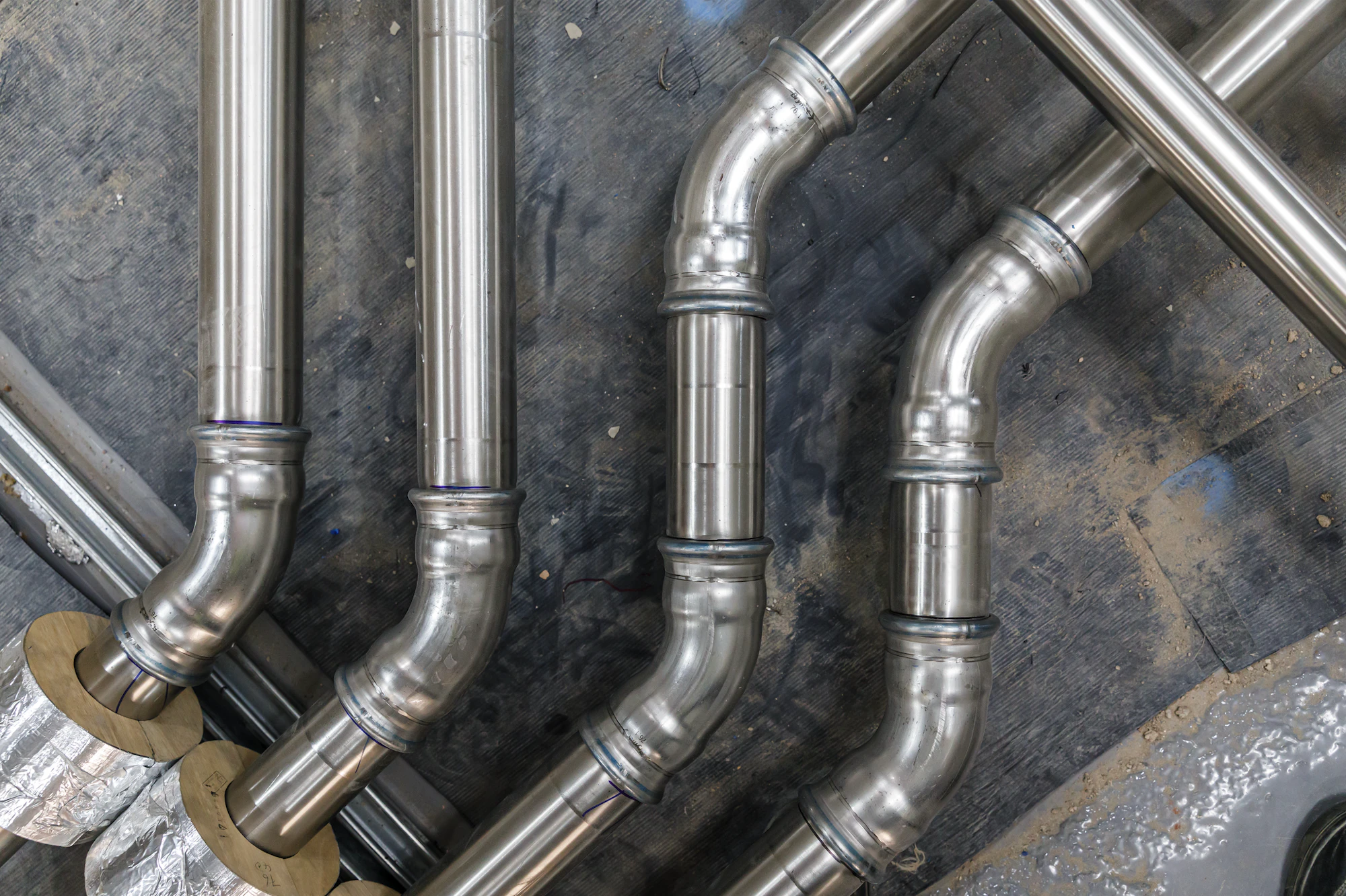
  • Stainless steel system sales increased eightfold. 

And in 2025 alone: 

  • Stainless steel turnover doubled. 
  • Copper turnover increased by approximately 15%. 

The growth of stainless steel has been difficult for me to ignore. Whilst no single factor explains this shift, what I find most interesting is that the increase broadly aligns with discussions taking place across the wider construction market. 

Contractors are increasingly looking beyond material cost alone and assessing programme risk, labour availability, procurement risk and whole-project value. 

In that environment, stainless steel has become a more regular consideration. 

Material performance remains the starting point

Copper remains an outstanding engineering material. 

Its thermal conductivity is substantially higher than stainless steel, making it particularly effective for heating and cooling applications. It remains familiar to installers, widely accepted across specifications and offers natural antimicrobial properties that are advantageous in potable water systems. 

Stainless steel brings different strengths. 

Corrosion resistance is often superior to that of copper, particularly in aggressive water conditions, and its mechanical strength allows thinner wall construction in many applications. 

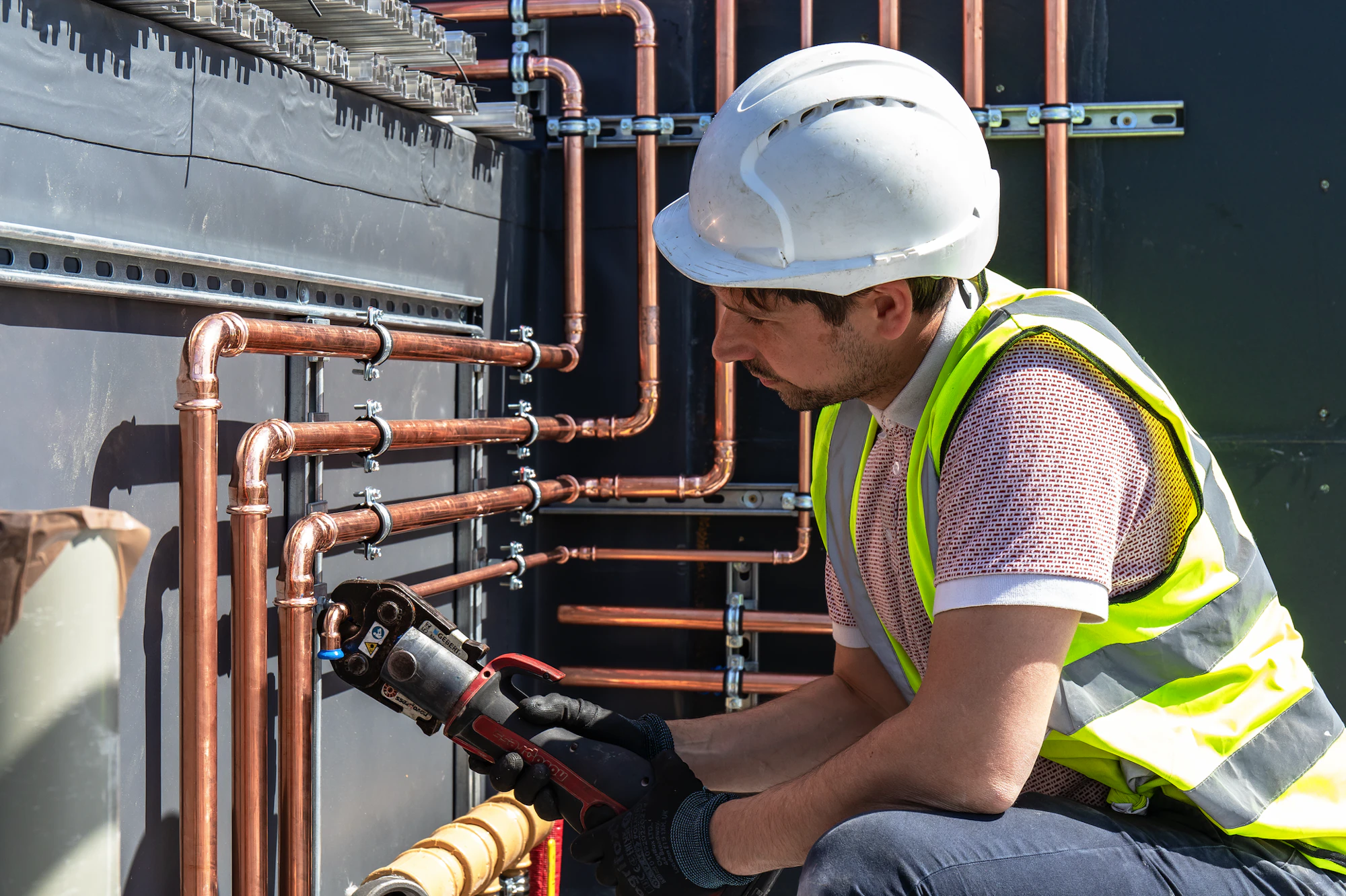
Across both copper and stainless-steel systems, press-fit technology has become increasingly popular due to its speed, consistency and elimination of hot work permit requirements. With labour headcount remaining one of the greatest pressures facing UK construction, both stainless steel and copper press-fit systems equally help reduce installation time and improve safety. 

The reality is that both materials perform exceptionally well when specified correctly and have many overlapping technical features that support numerous applications. 

To discuss the differences between the two materials in more detail, talk to our specification team.  

The hidden cost of volatility

In my experience, material prices rarely tell the full story. If copper prices move significantly between tender and procurement, contractors may face margin pressure or be forced into value-engineering exercises later in the programme. 

Equally, exposed copper installations remain vulnerable to theft. 

According to industry insurers and site managers, copper theft continues to create direct material loss, programme disruption and increased replacement costs across UK construction projects. 

The impact extends beyond the value of the stolen material itself. 

Labour must often return to site, commissioning activities may be delayed, and project milestones can be affected. These risks are rarely visible when comparing material rates on a spreadsheet. 

What the industry appears to be doing

The market is not abandoning copper. Far from it. Demand forecasts suggest global consumption will keep rising throughout the next decade. 

Copper’s recyclability and established circular economy credentials will continue to become important factors as consultants increasingly consider lifecycle performance, whole-life cost and embodied carbon alongside technical performance. While contractors are focusing more closely on procurement exposure, programme certainty and resource availability. 

Managing risk in an uncertain market

Brymec Breeze was developed around a simple principle: to eliminate avoidable risk from the supply chain. By removing traditional distribution layers and supporting projects with direct manufacturer control, significant UK stockholding and predictable delivery routes, the model is designed to reduce delays, substitutions and procurement uncertainty.  

Brymec currently holds more than £15 million of UK stock across core ranges, helping customers maintain programme certainty even when markets remain volatile. 

No supplier can control global copper prices, but what can be controlled is availability, lead times, visibility and communication. 

As commodity volatility becomes a larger factor in project delivery, those elements become increasingly important. 

Looking ahead…

Copper will remain one of the most important materials in building services. Its thermal conductivity, proven performance and industry familiarity ensure it will continue to play a critical role across heating, cooling and water systems. 

However, if current forecasts prove accurate, demand growth from electrification, AI infrastructure and energy transition projects will continue placing pressure on global supply. 

At the same time, Brymec’s own data shows stainless steel demand growing significantly faster than copper between 2020 and 2026. Whether those trends continue remains to be seen. 

What is already clear is that the most successful projects will not necessarily be those that secure the lowest material price; they will be those that understand the relationship between material performance, programme certainty, labour productivity and supply chain resilience. 

In today’s market, certainty has become a specification consideration in its own right. Consultants and contractors must plan ahead and work with manufacturers early. 

Have you visited our new technical resource library?

Browse, share and download all the information you need for our drainage systems, supply systems, valves and plant room equipment.