
Energy-Efficient Residential Construction in 2026: The Data Behind the Demand

Find out how energy efficiency in residential construction is being shaped by regulation, capital markets, occupant expectation and performance accountability.

Author: Charlotte Dale

Charlotte Dale

Energy efficiency in residential construction is no longer being driven by aspiration, it is being shaped by regulation, capital markets, occupant expectation and performance accountability.

For consultants and contractors operating in the UK M&E and building services space, the shift is measurable, and it is accelerating.

This insight piece draws on the latest available UK government data, Climate Change Committee reporting, and industry research to unpack what is driving demand for energy-efficient homes, and what it means for project delivery.

The regulatory trajectory is clear, and tightening

The UK’s Future Homes Standard, which came into force in 2025, is expected to deliver homes that produce 75–80% lower carbon emissions compared to those built under previous regulations.

Alongside this, the government’s consultation response on improving energy performance in privately rented homes reaffirmed the intention to raise minimum EPC requirements to Band C by 2030.

This matters for consultants specifying systems and contractors delivering schemes because EPC performance is increasingly influencing asset value, local authorities are setting ambitious carbon targets within planning policy, and clients are demanding future-proofed compliance rather than minimum compliance.

Regulatory uncertainty previously slowed investment decisions. The direction of travel is now sufficiently defined that higher energy performance is becoming the safest specification strategy.

Brymec delivery

EPC data shows new-build expectations have shifted

Energy Performance Certificate statistics published by DESNZ show that the majority of new dwellings in England achieve EPC ratings of A or B, significantly outperforming existing housing stock.

This creates a widening performance gap between new build residential (high EPC expectation), and existing stock (predominantly EPC C–E).

For consultants, this means design intent must consistently translate into as-built performance. For contractors, it increases scrutiny on installation quality, commissioning, and coordination.

The “performance gap” conversation is no longer academic, it has financial, compliance and reputational implications.

Heat pump growth reinforces fabric-first design

Low-carbon heating adoption continues to grow. The Climate Change Committee’s 2025 Progress Report to Parliament highlights that heat pump deployment is increasing but must accelerate significantly to meet Net Zero targets.

DESNZ heat pump deployment statistics show continued upward momentum through 2025, with installation numbers rising year-on-year and supported by the Boiler Upgrade Scheme, which provides grants for low-carbon heating technologies. This reinforces a critical technical principle:

  • Fabric efficiency reduces system sizing.
  • Correct emitter design improves seasonal performance factors.
  • Proper structural support and vibration control protect long-term reliability.

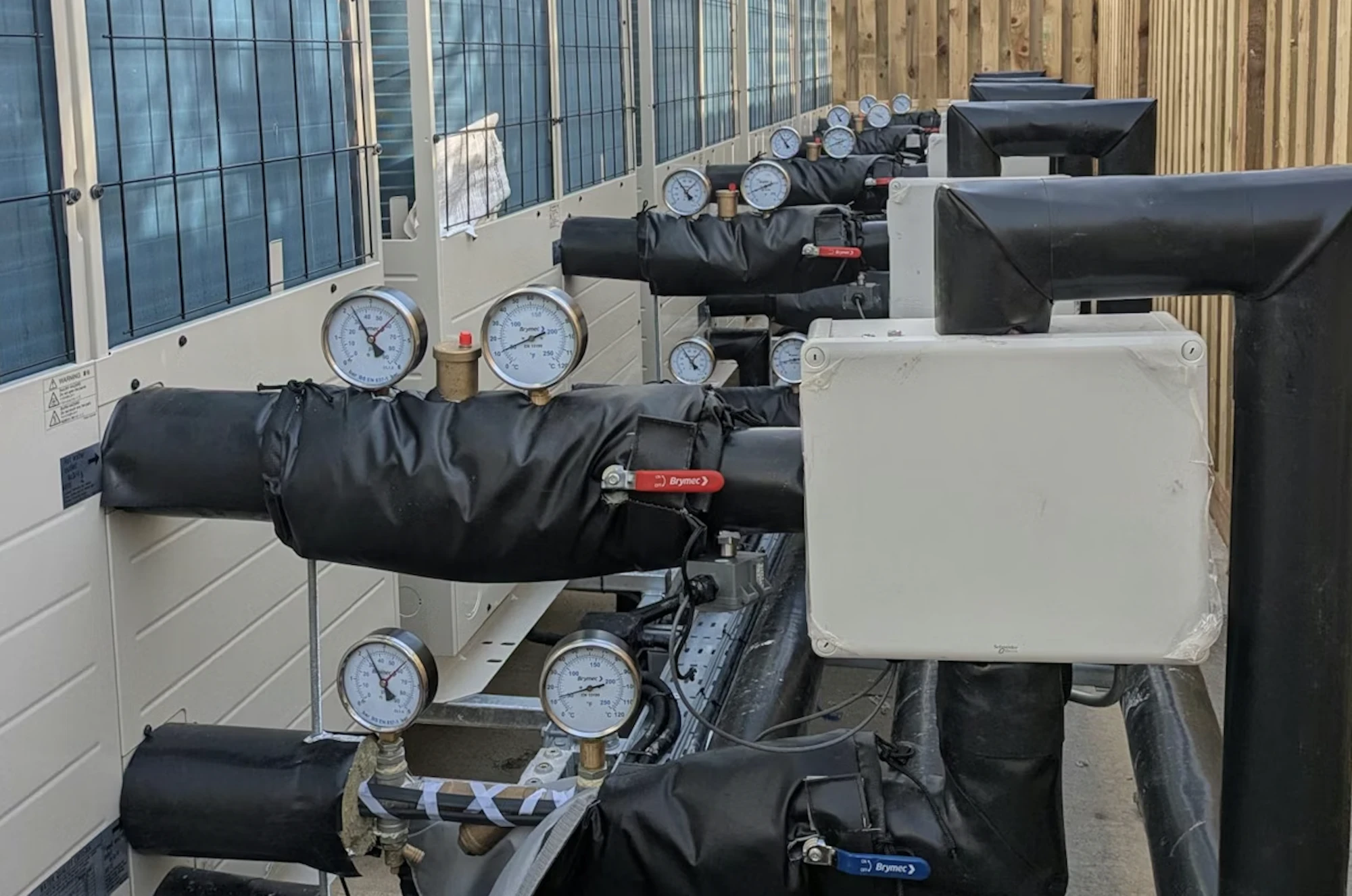
Demand for heat pumps is therefore indirectly driving demand for better building performance and more robust plant support solutions, particularly in high-rise residential where rooftop ASHP arrays are becoming common.

Occupant demand is pragmatic, not ideological

Evidence from the Climate Change Committee’s 2025 Progress Report to Parliament also highlights that the transition to low-carbon heating is accelerating but remains constrained by cost and consumer confidence. Fewer than 2% of UK homes currently use heat pumps, despite rapid recent growth in installations.

Cost modelling for residential retrofit also indicates that the financial case remains a decisive factor for households, with upgrade costs for insulation and low-carbon heating often estimated in the £10,000–£20,000 range depending on property type.

The implication is clear: energy efficiency upgrades are increasingly valued not only for environmental reasons, but because they reduce long-term energy costs and financial uncertainty. Consultants must therefore design with operational outcomes in mind, not just compliance metrics, and contractors must deliver installation quality that protects long-term performance.

Investors and lenders are influencing the market

Institutional investors increasingly assess assets against ESG criteria. Residential portfolios with lower EPC ratings face growing transition risk.

While the UK has not yet introduced widespread mandatory mortgage-linked EPC requirements, lenders are already offering preferential “green” products for higher-rated homes. This shifts demand upstream:

  • Developers require higher performance specifications.
  • Consultants must evidence compliance clearly.
  • Contractors must ensure installation supports certification outcomes.

Energy efficiency is now tied to asset liquidity and financing attractiveness, not just carbon reduction.

Programme pressure remains, efficiency must not slow delivery

The Construction Leadership Council continues to highlight the need for improved productivity in UK construction. High-rise residential schemes face intense programme pressure, particularly in urban environments where crane time, rooftop access and sequencing constraints are critical.

Energy-efficient systems, particularly rooftop ASHP arrays, plant enclosures and pump skids, add structural and coordination complexity.

Reducing on-site assembly time, ensuring load-tested structural integrity, and managing vibration isolation are not peripheral concerns; they are essential to maintaining both programme and compliance.

What This Means for YOU.

  • Design intent must align with deliverability.
  • Structural coordination for rooftop plant is no longer optional.
  • Vibration compatibility and long-term durability influence system performance.
  • Documentation and submittal speed impact project timelines as much as engineering accuracy.
  • Pre-assembled, modular support systems reduce rooftop labour risk.
  • Accurate load calculations protect both structure and warranty.
  • Compliance documentation needs to move at programme speed.
  • Installation quality directly impacts EPC outcomes and operational performance.

The evidence from government data, CCC reporting and EPC statistics shows energy-efficient homes are becoming the baseline expectation. Low-carbon heating adoption is increasing, regulatory direction is firming rather than softening, buyers and renters link efficiency to financial stability, and investors are pricing energy performance risk. Those who understand both the regulatory landscape and the practical realities of high-rise plant installation will shape the next phase of residential construction.

The market is demanding certainty. The technical community must respond with performance.